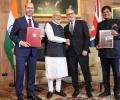
'That way you're not hostage just to US sort of exports to India.'
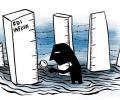
The government has identified critical sectors, including electronics, chemicals, leather and footwear, and toys, where value chains can be strengthened to facilitate and drive foreign direct investment (FDI) into the country. Invest India, the investment promotion and facilitating agency under the Department for Promotion of Industry and Internal Trade (DPIIT), has been actively identifying key value chains to focus on.
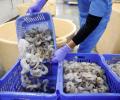
India's shrimp sector was pushed into uncertainty following US President Donald Trump's decision to impose a 25 per cent tariff on all goods imported into the US from India.

China accounts for about 70 per cent of global rare earth mining and nearly 90 per cent of rare earth magnet production, making it a dominant player and giving it significant leverage in global supply chains.

At the Mumbai campus the institute will offer both UG and graduate degrees, most of its courses will focus on science, technology, engineering and mathematics.
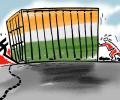
Merchandise exports to the US jumped 23.5 per cent year-on-year (Y-o-Y) to $8.3 billion in June, even as India's overall outbound shipments witnessed contraction during the month, according to the data released by the commerce department on Tuesday. The increase in outbound shipments to the US was largely driven by the rush among exporters to utilise America's pause on its plans to impose country-specific reciprocal tariffs.
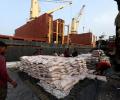
India has a comparative edge over key competitors in a majority of products it exports to the US and stands to gain market share as the US raises tariffs on its major trade partners, NITI Aayog said on Monday. In its quarterly trade report, it recommended that the government fast-track the India-US free trade agreement with time-bound goals to resolve non-tariff barriers and finalise digital trade rules on data flows and e-signatures to support services exports.

The bulk of these districts are in Bihar, where 87 per cent districts are monsoon-deficient till July 9.
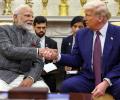
'India's farmers will be unable to compete with the US, given the subsidies that the latter provides its farmers.'
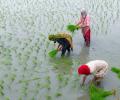
This would be due to early monsoon onset, abundant precipitation in the soil and the government's higher minimum support price (MSP) for farmers, the USDA said in its assessment.

Around 74 per cent rural households expect their incomes to increase in the next one year, according to a bimonthly survey conducted by the National Bank for Agriculture and Rural Development (Nabard) in May 2025. The percentage recorded was 72 in March.

Heatwave may abate over most parts of North India in next two days; temperatures likely to drop by 2-3C.
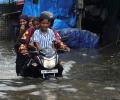
The last time the southwest monsoon arrived earlier than in 2025 -- that is, back in 2009 -- the rains lost steam after the early onset and ended the season with almost 23 per cent deficient rainfall, which was the lowest recorded average rainfall in several decades over India.
The frequency of short-duration, heavy rainfall events over central India and long-duration heavy rainfall events over the north-western coasts of the country has risen considerably in the last few decades.
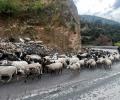
The edited sheep contains no foreign DNA, distinguishing it from transgenic organisms and paving the way for regulatory approval under India's evolving biotech policy framework.

The varieties will take at least 4 to 5 years to reach farmers after they complete the usual cycle of breeder, foundation and certified seeds.
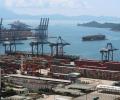
India's major imports from the US include crude oil and petroleum products, gold and jewellery, plastics, aircraft, and electrical machinery and components. The key exports to the US comprise pharmaceuticals and biologicals, telecom equipment, precious and semi-precious stones, petroleum products, gold and precious metal jewellery, and ready-made garments.
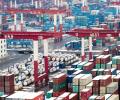
India's trade deficit with China neared $100 billion in FY25, amid escalating concerns of dumping, data released by the commerce department on Wednesday showed. Chinese imports rose by 11.5 per cent to $113.45 billion, while outbound shipments to the neighbouring country saw 14.5 per cent contraction to $14.2 billion.

A government official said India and the US are exploring an interim trade deal within 90 days.

With US President Donald Trump "temporarily suspending" country-specific reciprocal tariffs until July 9, India sees the three-month window as an opportunity to renew its push for a proposed bilateral trade agreement (BTA) with the US and expedite finalisation of the first tranche of the trade deal.
 © 2026 Rediff.com - Advertise with us - Disclaimer - Privacy Policy - Sitemap - Feedback - About us - Terms of use - Grievances